








Neurosurgeons at Medical Center Hospital Successfully Eliminate a Rare Neurological Disorder Using a Unique Endoscopic Procedure
Neurosurgeons at the Medical Center Hospital successfully performed a high-technology endoscopic surgical procedure on a patient with a rare and severe neurological disorder — hemifacial spasm. Owing to a modern minimally invasive intervention, the underlying cause of the disease was completely eliminated, restoring the patient’s quality of life.
“The patient had been followed for several years with pronounced, uncontrolled contractions of the facial muscles on the left side of the face. The disease demonstrated a progressive course and significantly limited daily activities and overall quality of life. Previously administered conservative therapy proved ineffective; therefore, a decision was made to proceed with surgical treatment under a government-funded medical care program,” noted neurosurgeon Abubakir Zulpykarov.
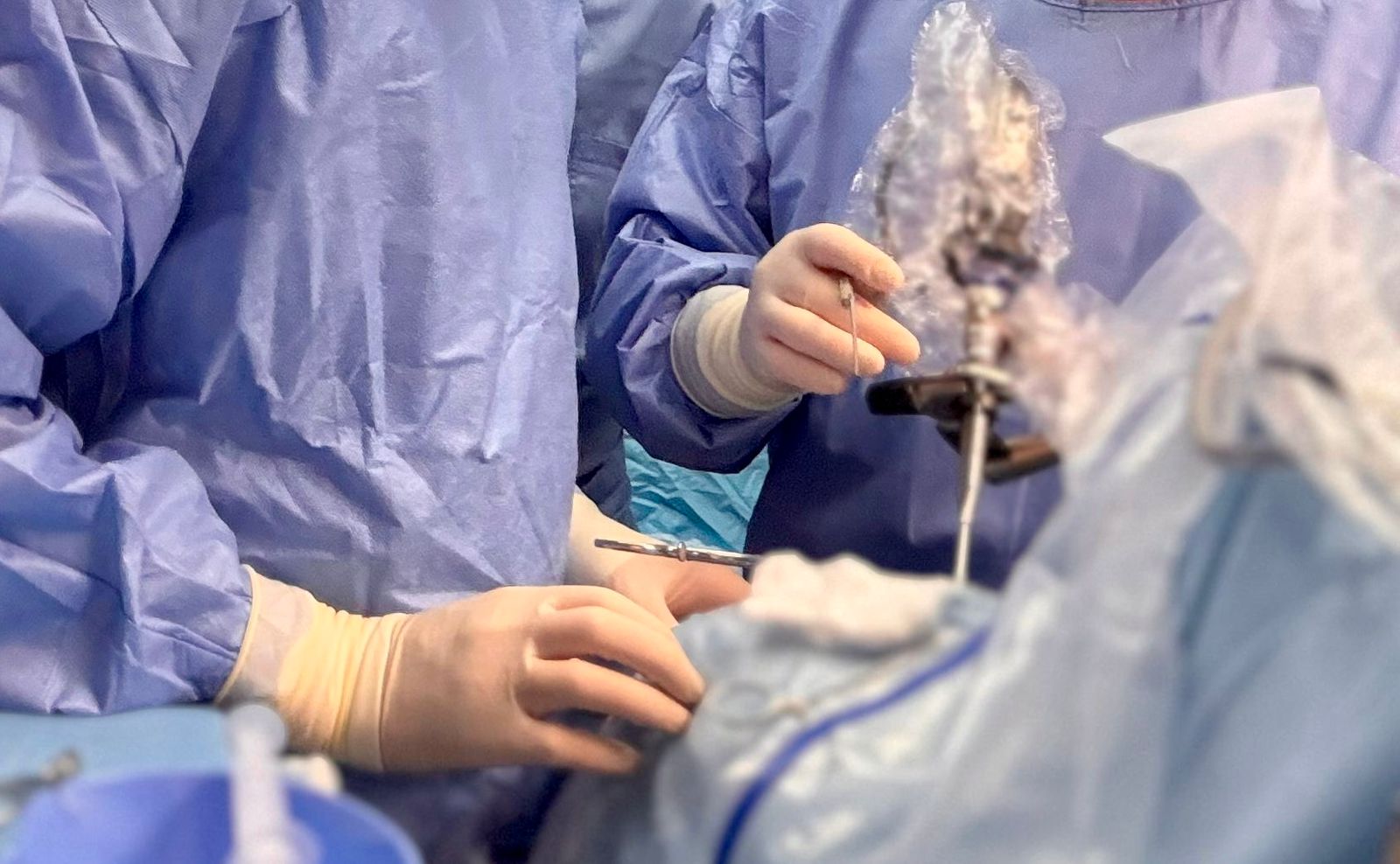
During the procedure, neurosurgeons performed endoscopic microvascular decompression of the left facial nerve via a retrosigmoid approach. Intraoperatively, a neurovascular conflict was identified, caused by compression of the facial nerve by an arterial vessel. Precise decompression was achieved with complete separation of the nerve from the vessel, thereby eliminating the root cause of the disease.
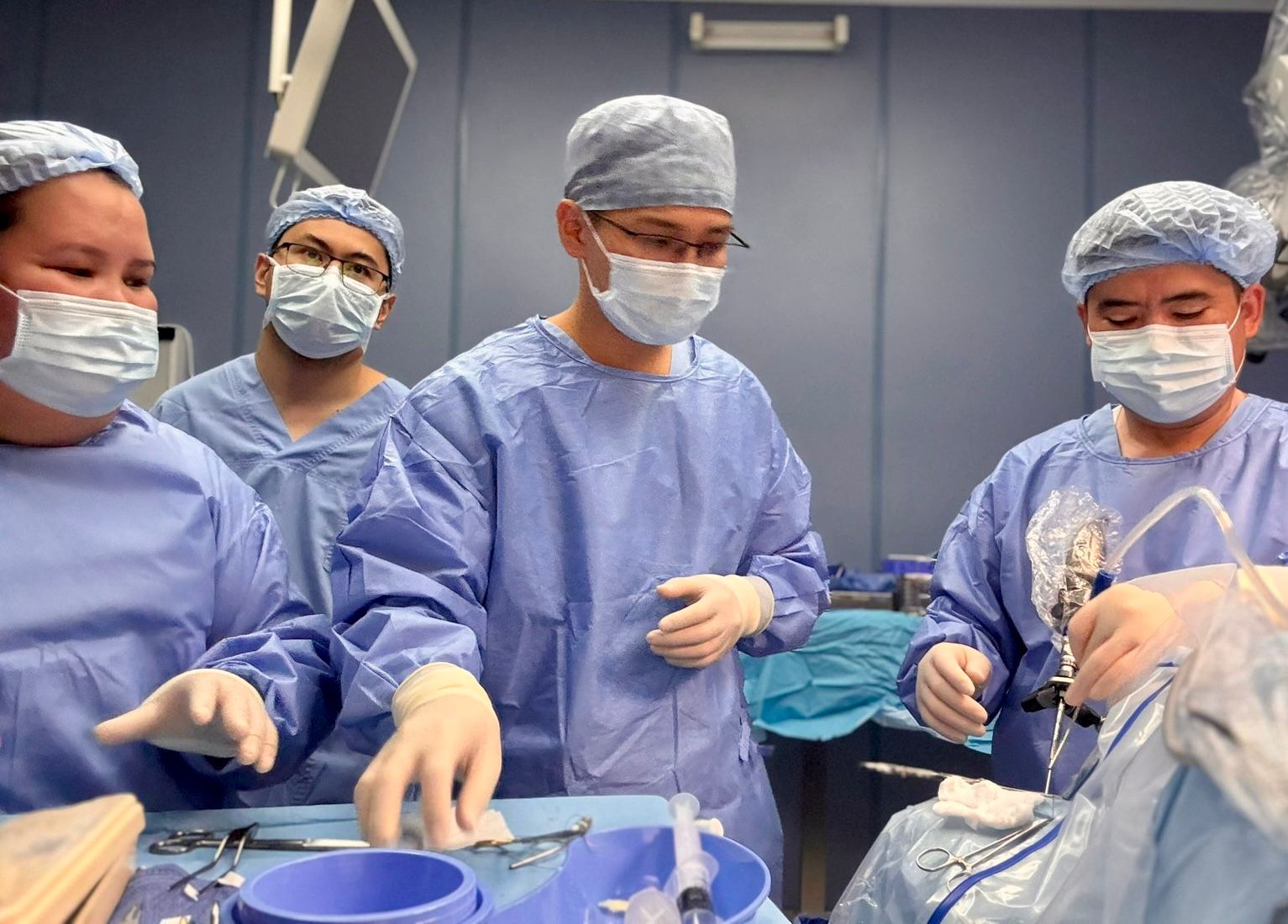
It should be noted that the procedure was performed by a multidisciplinary surgical team consisting of neurosurgeons A. Zulpykarov, A. Serikbay, and A. Akhmadiev; operating room nurses Z. Tokayeva and I. Abdrash; anesthesiologist E. Bersugurov; and nurse anesthetist R. Uristembaeva.
The uniqueness of this procedure lies in the use of an endoscopic technique, which significantly expands the neurosurgeon’s capabilities when operating in deep and anatomically challenging regions of the brain. Unlike conventional microscopic techniques, endoscopy provides a wide viewing angle and high-quality visualization, allowing the identification of neurovascular conflicts even in so-called “blind zones.”
The application of endoscopy renders the procedure minimally invasive: surgical exposure is reduced, trauma to surrounding tissues is minimized, the risk of complications is lowered, and postoperative recovery is significantly accelerated. This approach not only alleviates symptoms but also radically eliminates the underlying cause of the disease, ensuring a durable clinical outcome.
The postoperative course was uneventful. The patient was mobilized on the first postoperative day, with no negative changes in neurological status. Facial muscle twitching resolved completely, and all prior complaints fully regressed.
This case confirms that endoscopic microvascular decompression is one of the most effective and advanced treatment modalities for hemifacial spasm and demonstrates the high level of neurosurgical care and implementation of advanced technologies at the Medical Center Hospital.